



HIGHER EDUCATION AND RESEARCH STRATEGY
- 2Universities
- #1city for students in France (Le Parisien Etudiant 2025)
- + 5,000researchers and research professors
- + 20 M€investment by Montpellier Métropole
Montpellier benefits from an outstanding academic, scientific, and entrepreneurial ecosystem to tackle the major challenges of our time. The area is home to more than ten national research organizations, internationally renowned “grandes écoles” (higher education institutions), and two universities of excellence, as confirmed by recent global rankings: among the top 200 universities worldwide in the overall ranking, 2nd in the world in ecology, 6th–8th in France, and 1st in the Occitanie region.
Montpellier Métropole's strategy demonstrates its commitment to strengthening synergies by supporting the emergence of collaborative projects involving universities, laboratories, startups, businesses, and members of the public in key sectors such as healthcare, agri-food, cultural and creative industries, and renewable energy.
By fostering connections between research, innovation, and the local economy, Montpellier Métropole also intends to use knowledge as a strategic lever for sustainable local development, in line with ecological, social, economic, and equitable transitions.

The 6 Pillars of Higher Education, Research, and Innovation (ESRI) strategy
Montpellier Métropole has adopted an ESRI roadmap intended to transform the area into a living laboratory where scientific and social innovation contributes to economic competitiveness, international attractiveness, and the building of a more resilient and inclusive future.
-
Montpellier Métropole invests to equip laboratories and modernize scientific infrastructure to support research excellence (€19 million from 2021 to 2027).
-
Montpellier works hard to ensure a fulfilling experience for students: combating financial insecurity, mental health, housing, sustainable mobility, culture, and sports.
-
Science at the heart of the city: participatory projects, science outreach (Agora, Genopolys, SUAPS), and expanded access to knowledge for all.
-
Montpellier BIC is a key player in innovation, collaborating with SATT AxLR and the University Innovation Hub at the University of Montpellier to transform research into concrete business projects.
-
A shared vision of international engagement among universities, businesses, and the local area to enhance global attractiveness and cooperation and to engage in joint initiatives.
-
Sustainable, connected campuses integrated into the city, designed for the well-being of the entire university community.
STAKEHOLDERS IN RESEARCH AND HIGHER EDUCATION
-
University of Montpellier (UM), a cornerstone of higher education and research in the Occitanie region, consistently ranks at the top of international rankings, particularly the Shanghai Ranking, where it is among the world’s top 200 universities in the 2025 Shanghai Ranking and ranks second globally in ecology.
Designated a University Innovation Hub, the university promotes and accelerates the utilization of research results, stimulates the creation of startups, fosters innovation in SMEs, and enhances the attractiveness of the Montpellier metropolitan area to external companies. University of Montpellier is one of the key drivers behind the I-SITE progam, whose goal is to build a university recognized internationally, particularly for its impact on societal challenges such as food security, environmental protection, and human health.
-
Paul Valéry Montpellier 3 University (UPV) is a higher education and research institution specializing in the humanities, arts, languages, and social sciences.
Accredited with the DD&RS label for sustainable development and social responsibility, it plays a key role in promoting the humanities and arts in Montpellier, particularly with regard to the development of Cultural and Creative Industries (CCI) through the MIRANDA Institute.
Ranked first among French universities in the LLASHS (Literature, Languages, Arts, Humanities, and Social Sciences) category in the 2024 edition of the QS World University Rankings, UPV also demonstrates a strong commitment to socially responsible and sustainable higher education and research.
-
Institut Agro Montpellier is a higher education and research institution active in the fields of food, agriculture, the environment, and land management, working closely with research organizations, universities, other prestigious higher education institutions, and stakeholders in the public and private sectors, both in France and around the world.
Since 2020, Institut Agro Montpellier has combined the teams of Montpellier SupAgro and Agrocampus Ouest, providing enhanced support to stakeholders in the agricultural and food sectors in order to drive agroecological, food, digital, and climate transitions through its contributions to training, research, innovation, and support for technical agricultural education.
-
CNRS plays a vital role in scientific research in the Montpellier metropolitan area, notably by fostering numerous scientific collaborations. While active across all scientific fields, its Occitanie East Delegation based in Montpellier is particularly prominent in the biological sciences, ecology & environment, and chemistry.
It comprises 55 operational research and service departments, not including research groups. No fewer than 131 startups have emerged from or are affiliated with the departments it oversees.
-
CIRAD is the French agricultural research organization dedicated to sustainable development in tropical and Mediterranean regions.
CIRAD's main location is its Montpellier center, which is home to two-thirds of its staff. A true platform open to the world, it serves as a network hub connecting all CIRAD locations and all employees across nearly 50 countries. CIRAD is a key player in agricultural research and international cooperation.
-
IRD, the French National Research Institute for Sustainable Development, is an internationally recognized multidisciplinary organization that works primarily in partnership with countries in the southern hemisphere and in France’s overseas territories.
As a key player in the international development framework, IRD’s priorities are centered on the implementation of the Sustainable Development Goals (SDGs).
-
INRAE is a French research institute dedicated to agriculture, food, the environment, and issues related to climate change. Its cutting-edge work in these areas is essential for sustainable development and the agriculture of the future.
In the Montpellier metropolitan area, INRAE hosts #DigitAG, the only Convergences Institute in France dedicated to digital agriculture.
-
INSERMis one of France's leading medical research institutes. Its researchers are dedicated to making new breakthroughs in the fields of health and medicine. INSERM plays a vital role in medical research in Montpellier.
Together with the Montpellier University Hospital (CHU) and University of Montpellier, INSERM runs Cyborg, a startup incubator specializing in biotechnology.
-
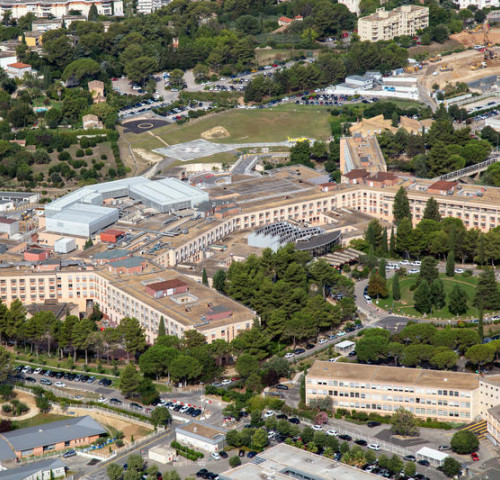
The Montpellier University Hospital (CHU) is a leading healthcare institution in France, particularly renowned for its commitment to medical innovation.
Two examples, among others: the CHU has established an Innovation Accelerator, an agile structure designed to offer proactive support to staff members with ideas that could help improve patient care; the CHU was one of the first, if not the first, to invest in a startup based on its campus, MedXCell. Its innovative approach makes it one of the major players in the healthcare ecosystem of the Montpellier metropolitan area.
KEY STRUCTURING PROJECTS
-
The University of Montpellier has been designated a University Innovation Hub (PUI). This helps stimulate the creation of startups, foster innovation within companies, and enhance the attractiveness of the Montpellier metropolitan area to outside businesses.
The University Innovation Hub has launched INITIUM, its academic incubator that supports innovators — whether students, doctoral candidates, or researchers within the I-SITE community — around the three pillars of “Feed, Care, and Protect.”
-
The MIRANDA Institute positions the Montpellier metropolitan area on the international stage for arts, culture, and heritage by leveraging the research-creation process to break down barriers between disciplines, approaches, and stakeholders.
The institute is led by Paul-Valéry Montpellier 3 University, a winner of the “Excellence in All Its Forms” call for projects under the France 2030 plan, in collaboration with the Montpellier National School of Architecture and in partnership with the Montpellier School of Fine Arts, the Montpellier National School of Dramatic Arts, and the Montpellier National Choreographic Center (ICI-CCN).
-
The ExposUM Institute is an initiative launched by University of Montpellier to study, educate, and promote the interaction between science and society regarding the environmental determinants of human health.
-
Established in 2011, LabEx Entreprendre — of which Montpellier Métropole is a partner — brings together approximately 200 researchers from six research teams in Law, Economics, and Management. It focuses on entrepreneurship and innovation related to sustainable development challenges.
LabEx Entreprendre offers research programs and chairs, and contributes to research training and the dissemination of knowledge. It plays an active role in the local and national entrepreneurial ecosystem, contributing to innovation and the creation of academic spin-offs.
-
#DigitAG, the Convergences Institute for Digital Agriculture, is one of ten French Convergence Institutes funded under the Investments for the Future program. As the only Convergence Institute dedicated to agriculture, it is also the only Convergence Institute in the Occitanie region.
Led by INRAE, #DigitAG conducts interdisciplinary research spanning agricultural sciences, engineering sciences, and social and management sciences (economics, sociology, management), seeking to establish the scientific and educational foundations necessary for the smooth rollout of digital agriculture in France, Europe, and the southern hemisphere.
Testimonials
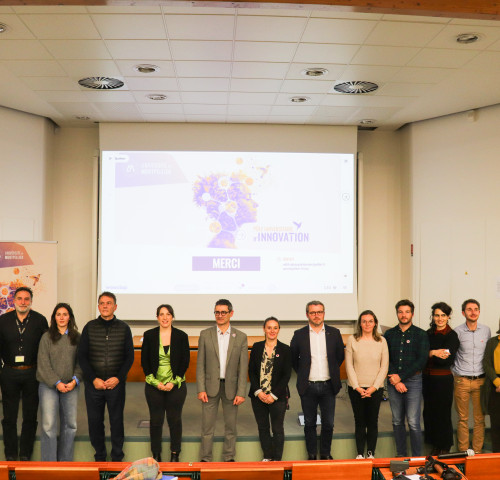
Intervenants, plénière du Pôle Universitaire d'Innovation (PUI) de Montpellier
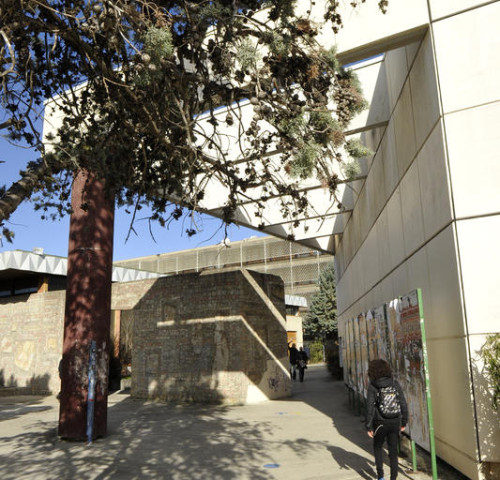
Université Paul Valerie©3M
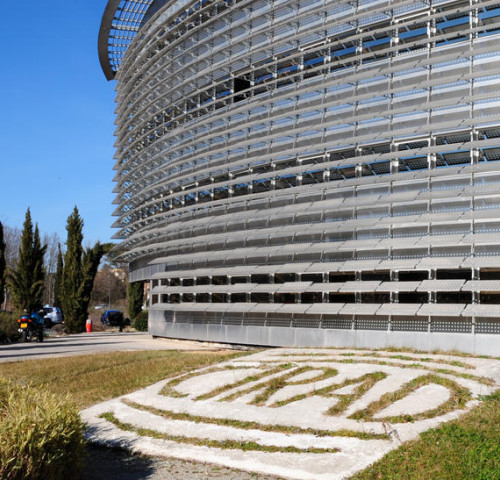
Centre de Coopération Internationale de Recherche Agronomique pour le Développement (CIRAD)
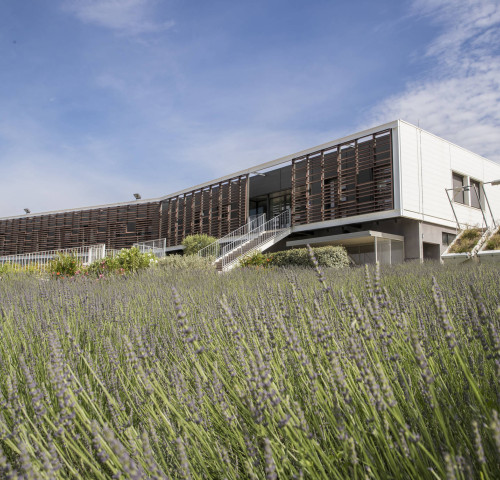
Centre national de la recherche scientifique (CNRS)
Centre Hospitalier Universitaire (CHU) de Montpellier
Shall we talk about impact?
In June 2023, Paul Valéry Montpellier 3 University was once again awarded the DD&RS Label for Sustainable Development and Social Responsibility, for a four-year period. The university had previously received this certification in 2019, underscoring the Montpellier metropolitan area’s strong commitment to socially responsible and sustainable higher education and research.